-
Master the Past Continuous Tense: Practical Rules, Examples, and Practice
The past continuous tense (also called the past progressive) describes actions that were in progress at a specific time in the past. It is commonly used to: This guide explains the form, uses, examples, signal words, and common mistakes. 🔁 Quick Review: If you need to review how Be verbs work in the present tense,
-

How to Lead Effective Business Meetings in English
In today’s global workplace, meetings are a core professional skill. Whether you work for a multinational company or collaborate with international clients, you need to participate actively, express opinions clearly, and manage discussion professionally. This guide focuses on the advanced functional language you need to lead and participate effectively in business meetings. 1️⃣ Opening a
-
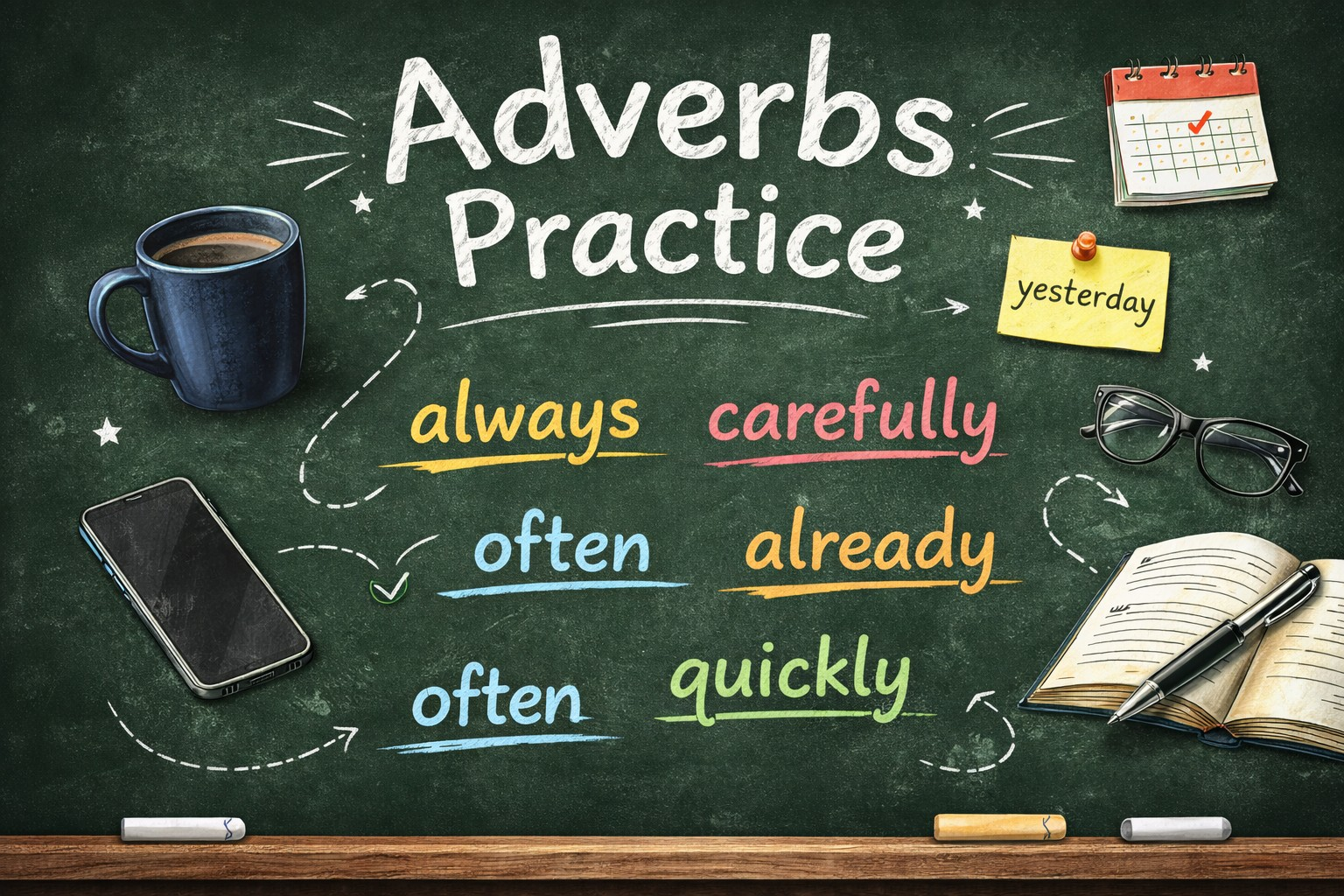
Adverbs in English: Practical Rules, Examples, and Practice
Adverbs in English add detail to verbs, adjectives, and even entire sentences. They answer questions like: In this guide, we will focus on the most important A2-level adverbs: Other types — such as adverbs of place — will be covered in a separate lesson. 1. Adverbs of Frequency Adverbs of frequency tell us how often
-
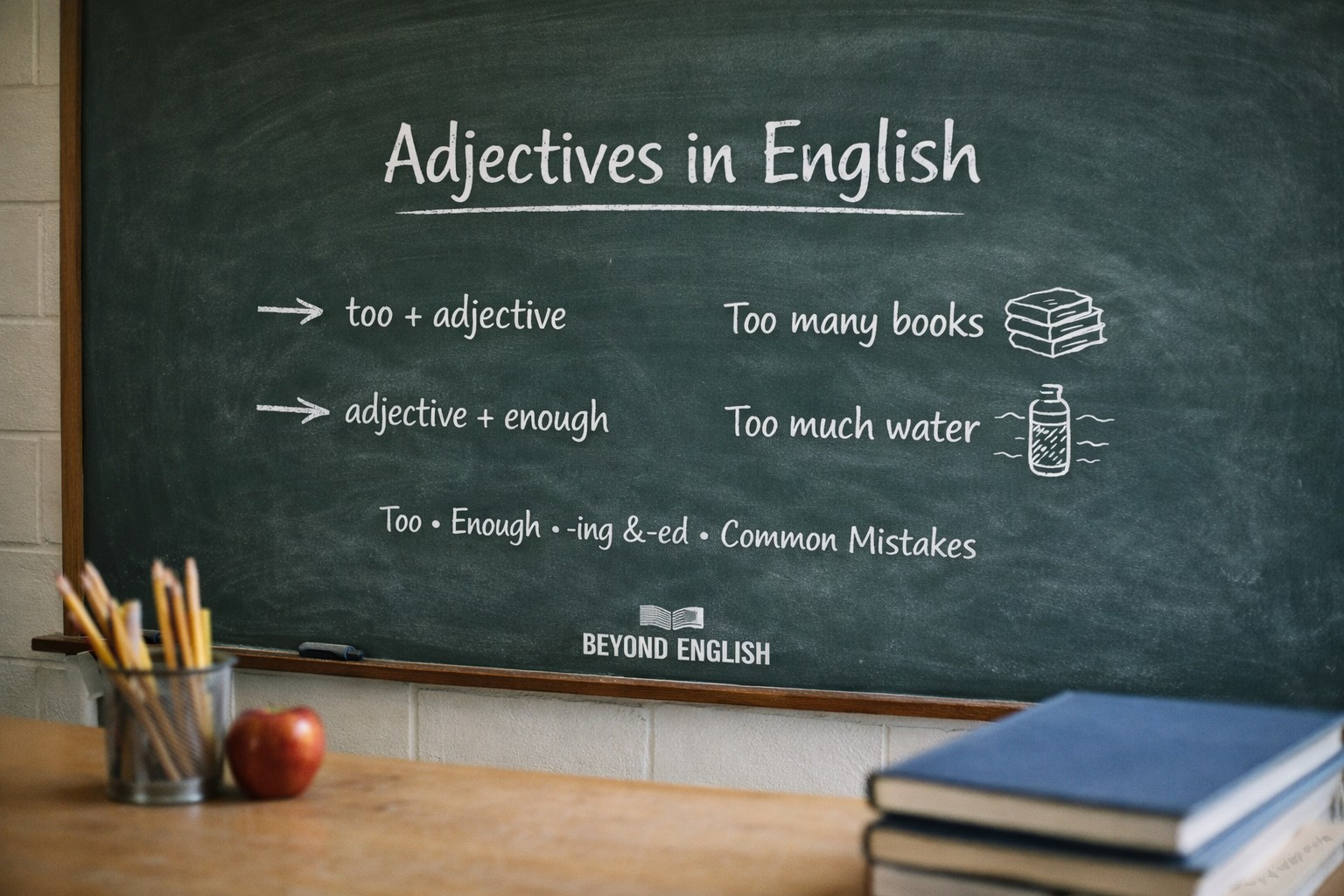
Adjectives in English: Practical Rules, Examples, and Practice
Adjectives in English are words that describe people, places, and things. They give more information about a noun. What Is an Adjective? An adjective describes or modifies a noun. They provide more information about a noun. Examples: Adjectives answer questions like: 2. Adjectives Before Nouns Most adjectives come before the noun. Structure Adjective + Noun
-
Mastering Direct and Indirect Objects in English
Understanding direct and indirect objects will help you make your sentences clearer and more natural. These grammar points are very common in everyday English, especially when we talk about giving, sending, or showing something. In this lesson, you’ll learn: What Is an Object? In English, an object comes after the verb. It tells us who
-
The Simple Past Tense in English: Rules, Examples, & Practice
The simple past tense is used to talk about completed actions or events that happened before now.It is one of the most important grammar topics for ESL beginners. In this guide, you’ll learn: 💡If you need a refresher on the simple present tense, check out our Simple Present Tense lesson for clear explanations and practice.
-
Adverbs of Frequency and Time Expressions: Practical Rules, Examples, & Practice
Adverbs of frequency and time expressions help English learners talk about how often something happens. These words are essential for daily conversations, routines, habits, and simple descriptions of lifestyle. This post focuses on clear rules, practical examples, and common mistakes appropriate for A2 to low B1 learners. 1. What Are Adverbs of Frequency? Adverbs of
-
Learn English with the Essential English: Level 1 * Book 5 Is Now Available on Amazon
Essential English – Level 1 * Book 5 continues the Beyond English™ approach to practical, real-world language learning. This book helps beginner and high-beginner ESL students strengthen their communication skills through clear grammar explanations, guided practice, and integrated reading, writing, listening, and speaking activities. What Learners Will Study in Book 5 Level 1 – Book
-
Independent and Dependent Clauses in English: How to Write Clear Sentences
Have you ever felt like your English sentences are too short and choppy?Or maybe you write long sentences but worry they sound confusing or incorrect? If so, you are not alone. Many English learners struggle with sentence structure—not because they lack vocabulary, but because they are unsure how ideas connect. The key to writing clear,
-
Essential English: Level 1 * Book 4 Is Now Available on Amazon
Build strong grammar, fluency, and confidence in everyday English. Essential English – Level 1 * Book 4 continues the Beyond English™ approach to practical, real-world language learning. This book helps beginner and high-beginner ESL students strengthen their communication skills through clear grammar explanations, guided practice, and integrated reading, writing, listening, and speaking activities. Book 4